

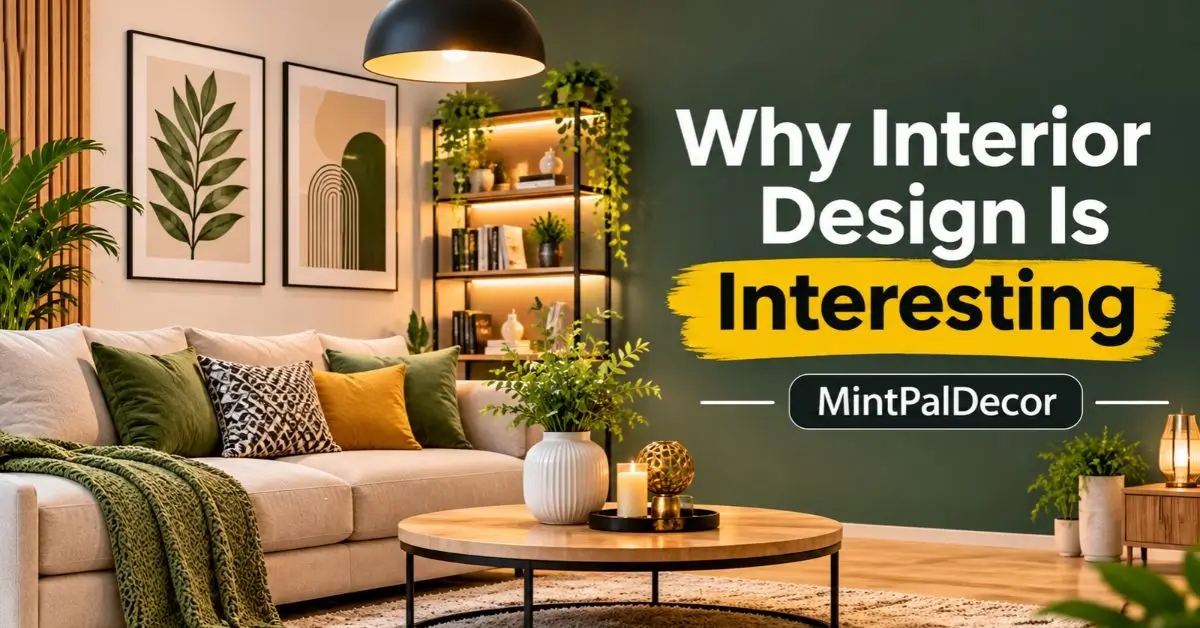
Why Interior Design Is Interesting: A Complete Guide from MintPalDecor
Most people spend between 80 and 90 percent of their time indoors. Yet very few stop to think about how the spaces around them affect their mood, productivity, and relationships. You walk into a room and immediately feel relaxed or tense, energized or drained, and you probably cannot explain exactly why. That invisible influence is what makes this field so captivating.
The reason why interior design is interesting, MintPalDecor explains, is that it sits at the crossroads of psychology, art, engineering, and personal identity. It is the practice of shaping indoor environments to improve how people live, work, and feel by combining color, texture, lighting, furniture placement, and spatial flow into cohesive, functional living spaces.
In this guide, you will discover the many layers that make interior design one of the most multidimensional creative fields in the world. You will learn how design affects your brain, your wallet, and your daily happiness, and you will walk away with practical ideas you can apply to your own home today.
Quick Summary
Interior design is interesting because it blends science and creativity to shape how you experience every room in your home. From color psychology and spatial planning to sustainability and personal expression, every design decision influences your mood, comfort, and daily routines. Understanding these principles helps you create spaces that genuinely improve your quality of life.
The Psychology Behind Every Room
The single most fascinating aspect of interior design is how deeply it affects human behavior and emotion. You do not need a degree in psychology to notice that a cluttered room makes you feel anxious or that a bright, airy kitchen puts you in a better mood for cooking.
Color is the most obvious example. Research consistently shows that cool tones like soft blues and greens promote calm and focus, which is why they work well in bedrooms and home offices. Warm tones like terracotta and golden yellow stimulate conversation and appetite, making them ideal for dining rooms and gathering spaces.
But color is just the beginning. Ceiling height influences how freely you think. Studies from the University of Minnesota found that people in rooms with 10-foot ceilings generated more creative ideas than those in rooms with 8-foot ceilings. Natural light exposure regulates your circadian rhythm and improves sleep quality. Even the texture of your furniture affects whether a room feels welcoming or formal.
When you understand these connections, you start to see every room in your home as a tool for shaping how you and your family feel throughout the day. That is a powerful realization, and it is a big part of why interior design is interesting to so many people beyond just professional decorators.
It Solves Real Problems Every Day
Interior design is not just about making things look pretty. At its core, it is about solving practical problems that affect your daily life.
Think about a small apartment in Brooklyn, New York. A family of three is living in 650 square feet. They need a workspace for remote jobs, a play area for their toddler, a dining table, and enough storage to keep the space from feeling chaotic. A skilled designer can use multifunctional furniture, vertical storage, and smart zoning to make that small apartment feel twice its actual size.
This problem-solving aspect is what separates interior design from pure decoration. Decoration is about adding finishing touches. Design is about rethinking the entire layout to serve the people who live there.
Common problems that good design solves include:
- Poor traffic flow that makes a room feel cramped even when it has plenty of square footage
- Inadequate storage that leads to chronic clutter and visual stress
- Bad lighting that causes eye strain during work hours and disrupts sleep at night
- Awkward room proportions that make furniture placement feel impossible
- Multi-use spaces that need to serve different functions at different times of day
Every home has at least one of these issues. Learning to identify and fix them is incredibly satisfying, and it is one of the main reasons people get hooked on home improvement projects.
The Creative Freedom Is Limitless
Few creative fields offer the same level of personal expression as interior design. A painter works on a canvas. A musician works with sound. An interior designer works with the three-dimensional space that people actually inhabit every single day.
The creative possibilities are almost infinite. You can mix a vintage mid-century modern sofa with contemporary art and industrial lighting. You can create a minimalist Japanese-inspired bedroom or a bold, maximalist living room filled with pattern and color. There are no rigid rules, only guidelines that help you achieve balance and harmony.
MintPalDecor frequently highlights how personal style evolves over time. The bedroom you designed at 25 will look very different from the one you create at 40, and that evolution is part of what keeps the field endlessly engaging. Your home becomes a living reflection of your tastes, experiences, and values.
This creative freedom also makes interior design one of the most accessible art forms. You do not need a gallery or a stage to share your vision. You just need a room, a budget, and a willingness to experiment.
Trends That Reflect Cultural Shifts
Interior design trends are not random. They mirror broader changes in how society lives, works, and thinks about the world. Paying attention to these trends gives you a fascinating window into cultural evolution.
For example, the massive shift toward remote work during 2020 and 2021 completely transformed home design priorities almost overnight. Suddenly, everyone needed a dedicated home office, better video call backgrounds, and stronger Wi-Fi infrastructure. Open floor plans, which had been popular for decades, started losing favor because people realized they needed separate, quiet spaces for Zoom meetings.
Sustainability is another major cultural shift reflected in modern design. More homeowners are choosing reclaimed wood furniture, low-VOC paints, energy-efficient lighting, and locally sourced materials. This is not just a trend. It represents a fundamental change in how people think about their environmental impact at home.
The growing interest in biophilic design, which incorporates natural elements like plants, water features, and organic materials into indoor spaces, reflects a deeper societal desire to reconnect with nature in an increasingly digital world.
When you start reading design trends through this cultural lens, the entire field becomes much more interesting and meaningful.
The Financial Impact Is Surprisingly Large
Many people do not realize how significantly interior design affects property value and household spending. This financial dimension adds another layer of interest to the field.
A well-designed kitchen renovation can return 60 to 80 percent of its cost when you sell your home, according to data from the National Association of Realtors. Simple updates like fresh paint, updated lighting fixtures, and modern cabinet hardware can make a home feel years newer without a major investment.
On the spending side, understanding design principles helps you avoid costly mistakes. Buying a sofa that is too large for your living room, choosing a paint color that clashes with your flooring, or investing in trendy furniture that looks dated within two years are all expensive errors that basic design knowledge can prevent.
Smart design is also about spending less over time. A room designed with durable materials, timeless colors, and flexible furniture arrangements will not need a complete overhaul every few years. That long-term thinking saves thousands of dollars over the life of a home.
How Design Styles Compare in Real Homes
To help you understand how different approaches to interior design play out in actual living spaces, here is a practical comparison of popular styles.
| Design Style | Key Features | Best For | Typical Budget Range |
|---|---|---|---|
| Modern Minimalist | Clean lines, neutral colors, minimal clutter | Small spaces and busy professionals | Low to moderate |
| Scandinavian | Light wood, white walls, cozy textiles, natural light | Families wanting warmth and simplicity | Moderate |
| Industrial | Exposed brick, metal fixtures, raw materials | Urban lofts and creative workspaces | Moderate to high |
| Bohemian | Mixed patterns, layered textures, global accents | Creative individuals who love color | Low to moderate |
| Traditional | Rich wood tones, classic furniture, symmetrical layouts | Formal homes and established neighborhoods | High |
Each style solves different problems and appeals to different lifestyles. The most interesting homes often blend elements from multiple styles to create something uniquely personal.
The Technology Revolution in Design
Technology has completely transformed how people approach interior design, making it more accessible and interactive than ever before.
Augmented reality apps now let you place virtual furniture in your actual room using your phone camera. You can see exactly how a new sofa will fit in your living room before you spend a single dollar. 3D rendering software allows you to walk through a photorealistic version of your redesigned kitchen before any construction begins.
Smart home integration has added an entirely new dimension to the field. Lighting systems that adjust color temperature throughout the day, motorized window treatments that respond to sunlight, and voice-controlled climate systems all require designers to think about technology as a core design element rather than an afterthought.
These tools have democratized the field. You no longer need to hire an expensive professional to visualize a room makeover. You can experiment with layouts, colors, and furniture arrangements on your tablet before committing to any changes.
Why It Matters More Than People Think
The question of why interior design is interesting, MintPalDecor suggests, ultimately comes down to one simple truth: your environment shapes your life more than you realize.
A well-designed home office can improve your focus and reduce work-related stress. A thoughtfully arranged kitchen can make cooking feel like a pleasure instead of a chore. A calming bedroom can help you fall asleep faster and wake up more refreshed. These are not luxury outcomes. They are basic quality-of-life improvements that good design delivers every single day.
In a world where people spend most of their waking hours indoors, the spaces we inhabit deserve more attention and intention than they typically receive. Interior design gives you the tools and the vocabulary to take control of those spaces and make them work for you.
Conclusion
Interior design is far more than choosing paint colors and arranging furniture. It is a multidisciplinary field that touches psychology, architecture, sustainability, technology, and personal identity. Every room in your home is an opportunity to improve how you live, and understanding the principles behind good design gives you the confidence to make those improvements yourself.
Whether you are planning a full home renovation or simply rearranging your living room for better flow, the knowledge you gain from exploring this field will pay dividends in comfort, functionality, and daily happiness for years to come.
If you found this guide helpful, explore more design inspiration and practical home styling tips at MintPalDecor to continue building the living spaces you truly love.
Frequently Asked Questions
Why is interior design interesting, according to MintPalDecor?
Interior design is interesting because it combines creativity and psychology to create spaces that improve comfort, mood, and everyday living.
Is interior design a good career choice in 2026?
Yes, interior design offers career opportunities in residential, commercial, and hospitality spaces. Skills in sustainable and functional design can also help designers stand out.
Can I learn interior design without going to school?
Yes, you can learn interior design through online courses, books, tutorials, and hands-on practice. Formal education may be required for certain professional roles and licensing.
What is the most important principle in interior design?
Balance is one of the most important interior design principles because it creates visual harmony through furniture placement, colors, textures, and proportions.
How does interior design affect mental health?
Interior design can influence mood and well-being through natural lighting, color choices, organization, and comfortable furniture. A well-organized and welcoming space can help reduce everyday stress.
What is the difference between interior design and interior decorating?
Interior design focuses on space planning, functionality, lighting, and layouts, while interior decorating focuses on furniture, colors, accessories, and visual appearance.
[…] acts as a movie theater, a reading lounge, a play area, and a place to entertain guests. Applying thehometrotters .com home decor ideas to this space starts with fixing the layout before buying a single new […]