

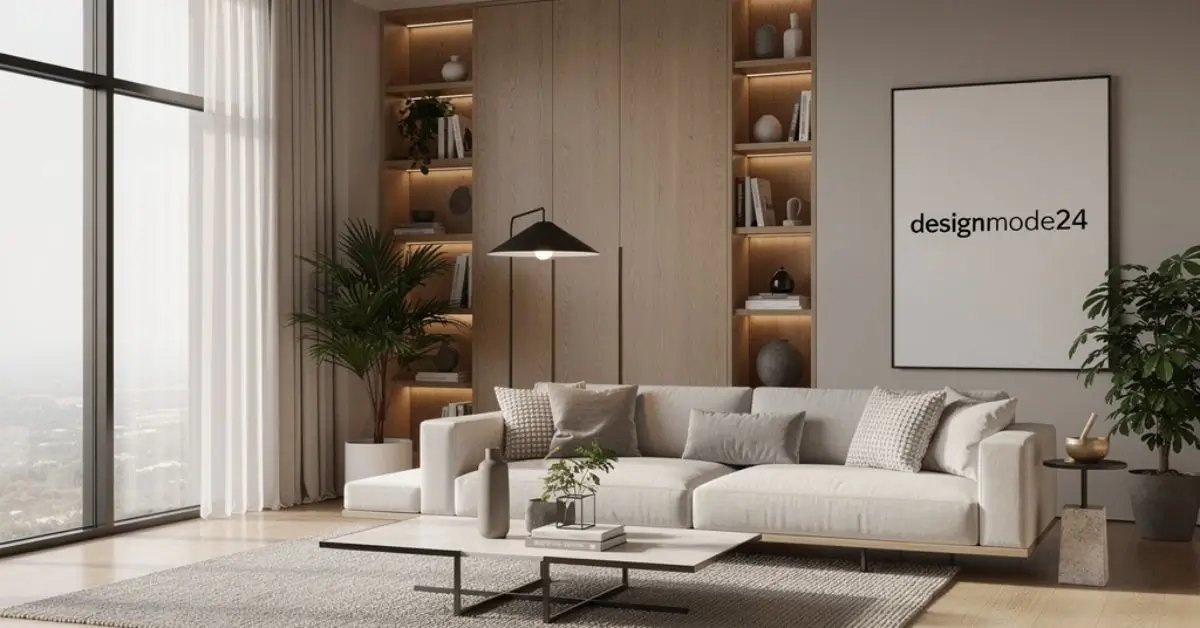
Why Finding the Right Interior Design Resource Is Harder Than It Looks
Walk into any bookstore or open any browser tab and you will find endless interior design content. Pinterest boards with millions of pins. Instagram feeds full of perfectly staged rooms. YouTube channels dedicated to renovation reveals. The volume of design inspiration available today is overwhelming.
But inspiration alone does not help you make decisions. Most people do not need more pictures of beautiful rooms. They need guidance — clear, practical information about what styles work in real homes, how to choose the right furniture, what color combinations actually hold up over time, and how to make a space feel put together without spending a fortune.
That gap between inspiration and practical guidance is exactly where platforms like DesignMode24 aim to sit.
Interior design DesignMode24 refers to the home styling and room design content published on the DesignMode24 platform — a digital resource covering modern interior design trends, room-by-room styling guides, furniture selection advice, color theory applications, and practical tips for transforming living spaces at different budget levels. It serves homeowners, renters, and design enthusiasts looking for direction beyond surface-level inspiration.
Quick Summary
This guide explains what interior design content DesignMode24 covers, who it helps, what topics it focuses on, and how to use it alongside other trusted resources to make better decisions about your home.
What Makes Interior Design Content Actually Useful
Before getting into what DesignMode24 specifically covers, it is worth understanding what separates genuinely useful interior design content from the kind that just looks good but leaves you no clearer on what to actually do.
Good interior design content does three things well.
First, it explains the why. Telling someone to use warm tones in a living room is not enough. Explaining that warm tones make large, open spaces feel more intimate — and that cool tones do the opposite — gives the reader something they can apply to their own situation.
Second, it connects to real constraints. Most people are not decorating a blank canvas with an unlimited budget. Useful content acknowledges room size, lighting conditions, rental restrictions, and budget realities. Advice that only works in a $2 million Manhattan penthouse is not advice for most readers.
Third, it is specific enough to act on. Vague suggestions like “add some texture” or “keep it minimal” are easy to write but hard to use. The best interior design guidance tells you exactly what that means — what materials, what furniture pieces, what color ratios, what layout principles.
Platforms that get these three things right consistently are the ones that build real audiences.
What Interior Design DesignMode24 Covers
The content on DesignMode24 spans several core areas of interior design. Here is what you can expect to find and how each area serves a different need.
Modern and Contemporary Style Guides
Modern interior design is one of the most searched and most misunderstood categories in home styling. People often confuse “modern” with “cold” or “empty.” Good modern design is actually about intentional simplicity — choosing pieces that serve a clear purpose and letting the quality of materials speak for itself.
DesignMode24 covers modern and contemporary styles with enough depth to actually distinguish between them. Contemporary design reflects what is trending right now. Modern design refers to a specific mid-century aesthetic rooted in clean lines, organic shapes, and a restrained color palette.
Understanding that difference helps you shop smarter. When a furniture retailer labels something “modern,” you now know what they mean — and whether it matches what you are actually going for.
Room-by-Room Design Guidance
One of the most practical content formats in interior design is room-specific guidance. The rules and priorities for a bedroom are very different from those for a home office, a kitchen, or a living room. Treating them the same way leads to spaces that feel off without a clear reason why.
DesignMode24 covers individual rooms with attention to how each space functions. A bedroom design guide, for example, would address layout around the bed as the focal point, lighting layers for different times of day, and storage solutions that do not make the room feel like a closet.
A living room guide would approach things differently — traffic flow, conversation arrangement, balancing a television as a functional focal point without letting it dominate the entire room.
This room-by-room approach is far more useful than general style inspiration because it respects the unique purpose of each space.
Color Theory for Home Interiors
Color is one of the most powerful tools in interior design and one of the most poorly understood. Most homeowners pick colors based on what they like in isolation — a paint swatch, a fabric sample — without considering how that color will interact with natural light, the room’s proportions, or the other colors already in the space.
DesignMode24 approaches color with practical context. This includes content on how different lighting conditions affect paint color throughout the day, how to build a cohesive color palette across connected rooms, and how to use accent colors without creating visual chaos.
A realistic example: a homeowner in Denver paints a north-facing bedroom a cool gray that looked perfect on the swatch. In the room, the gray reads as almost blue because north-facing rooms receive indirect, cooler light all day. Understanding this basic principle before picking the color would have saved the repaint.
Furniture Selection and Layout Principles
Furniture selection is where many people make their most expensive mistakes. Buying a sofa that is too large for the room, choosing a dining table that blocks the natural traffic path, or selecting pieces that look good individually but do not work together — these are common and costly errors.
The platform covers furniture layout principles that apply across room sizes and styles. These include the rule of leaving adequate clearance between furniture pieces, how to anchor a seating area with a rug, and how to create visual balance when furniture pieces have different visual weights.
For someone furnishing a first home or apartment, this kind of foundational guidance is genuinely valuable. It saves money by helping you buy right the first time.
Design on a Budget
Not everyone is working with a generous renovation budget. One of the most searched topics in interior design is how to make a space look designed and intentional without spending heavily. This is where content about thrifting, DIY updates, and strategic splurging versus saving becomes essential.
DesignMode24 includes content that helps budget-conscious homeowners prioritize. The general principle is to spend on the pieces you touch every day — a quality sofa, a good mattress, a well-made dining table — and save on decorative items that are easy to swap out as trends change.
A well-placed $40 throw blanket or a $25 plant in a quality pot can do more for a room than a $200 decorative item that does not fit the space. Understanding proportion and placement matters more than spending more.
How to Use DesignMode24 Alongside Other Resources
No single platform should be your only source for interior design decisions. Here is how to build a smart research approach.
Use DesignMode24 for conceptual guidance and trend awareness. It is a strong starting point for understanding styles, learning principles, and finding direction when you feel stuck.
Use Pinterest and Instagram for visual inspiration. Save images that you are genuinely drawn to across different accounts and styles. After a while, patterns emerge — you consistently save rooms with a certain color temperature, or you always gravitate toward a particular furniture style. That tells you something real about your taste.
Consult manufacturer websites and retailer guides for product-specific decisions. When choosing paint colors, Benjamin Moore and Sherwin-Williams both offer detailed room visualizers and color family guides. When buying furniture, the retailer’s dimension guides and room-size recommendations are essential.
Consider a one-hour consultation with a professional designer if you are making significant financial decisions — a full room renovation, a kitchen remodel, or a new home furnish. Many interior designers in the US offer single consultations for $150 to $300 that can save you from costly mistakes.
A Quick Reference: Interior Design Decisions and Where to Start
| Design Decision | What to Consider First | Common Mistake to Avoid |
|---|---|---|
| Choosing a paint color | Room’s light direction and natural lighting | Picking from swatch alone without testing |
| Buying a sofa | Room dimensions and traffic flow | Choosing based on look alone, ignoring scale |
| Selecting a rug | Furniture leg placement and room anchor | Going too small — rug should ground the seating area |
| Layering lighting | Ambient, task, and accent needs | Relying on one overhead light for the whole room |
| Mixing patterns | Scale variation and shared color | Mixing patterns of the same scale — creates visual noise |
| Decluttering a space | Storage solutions before decoration | Adding more decor to fix a clutter problem |
Interior Design Trends Worth Knowing Right Now
Understanding current trends helps you make choices that feel fresh without being so trend-dependent that your space looks dated in two years.
Warm neutrals are replacing cool grays. After years of gray dominating interiors, warmer tones — creamy whites, soft taupes, warm beiges — have taken over. These tones work well with natural materials like wood and linen, which are also heavily trending.
Natural materials and textures. Wood, stone, rattan, jute, and linen are central to current interior design aesthetics. These materials add warmth and visual interest without requiring bold color choices.
Multi-functional spaces. Post-pandemic living has pushed designers and homeowners to rethink how rooms serve multiple purposes. A guest room that doubles as a home office, or a living room that accommodates remote work, requires thoughtful layout and furniture choices.
Quieter, more personal spaces. The maximalist trend of the mid-2010s has largely given way to more considered, calming interiors. Less clutter, more intentional curation, and spaces that reflect the people who live in them rather than a showroom aesthetic.
Platforms like interior design DesignMode24 track these shifts and help readers understand how to apply trend information to their specific homes — which is far more useful than trend reporting that stays purely abstract.
Conclusion
Interior design is not about having expensive things or following trends perfectly. It is about understanding how space, light, color, and proportion work together — and making choices that reflect how you actually live.
Platforms like interior design DesignMode24 serve a real purpose by translating design principles into accessible, practical guidance for people who care about their homes but are not professional designers. Used alongside other trusted resources and your own developing eye for what you love, they can genuinely help you make better decisions.
If this guide helped you think more clearly about your space or your design approach, explore more content on room styling, color selection, and furniture layout to keep building your knowledge. Good design is a skill that develops over time — and every informed decision moves you forward.
Frequently Asked Questions
What is DesignMode24?
DesignMode24 is a platform that shares interior design tips, home décor ideas, furniture advice, color guides, and budget-friendly decorating inspiration.
How do I choose the right interior design style?
Save room ideas you like, identify common colors and materials, then use those elements consistently throughout your home.
What are the most important interior design principles?
Focus on proper furniture scale, layered lighting, balanced layouts, and correctly sized rugs for a cohesive look.
How much does a living room redesign cost?
A simple refresh can cost under $1,000, while a complete makeover with new furniture may range from $5,000 to $15,000 or more.
What is the difference between modern and contemporary design?
Modern design follows a classic 20th-century style, while contemporary design reflects current trends and evolves over time.