

Home Device Decoradtech
Smart electronics make our daily routines easier, but they often make our living spaces look messy. Huge black TV screens dominate living room walls, thick power cords hang down from side tables, and plastic smart speakers clash with warm wooden furniture. Many homeowners feel forced to choose between having a convenient modern home and keeping a calm, beautiful interior space.
That is why the concept of decorative technology has become so popular across the United States, Canada, and the UK. People want smart convenience without the visual clutter of standard consumer electronics.
A home device decoradtech setup refers to smart home technology designed or styled to blend smoothly into interior home decor, combining modern electronic features with materials like wood, fabric, stone, and concealed wiring to create an attractive, clutter-free living environment.
This guide will teach you how to choose attractive gadgets, hide messy wires, match finishes with your existing furniture, and build a smart home that looks just as good as it works.
Quick Summary
Decorative smart tech brings together electronics and interior styling. To make it work in your home, pick gadgets made with neutral fabrics or natural wood finishes, hide your power cords inside walls or furniture channels, use dual-purpose items like frame TVs, and avoid placing plastic devices in the center of open rooms.
Why Standard Smart Devices Ruin Room Aesthetics
Most consumer tech products are built in factories that prioritize cheap plastic materials and fast assembly over interior beauty. As a result, you end up with shiny black boxes, bright blinking LED lights, and rubber cords that do not match anything else in your home.
When you place three or four standard smart items in a single room, visual clutter builds up quickly. A smart hub on your kitchen counter takes away food prep space. A voice assistant on your wooden nightstand draws your eye away from your decorative lamps and family photos.
The goal is not to get rid of your favorite smart tools. Instead, the goal is to shift toward a thoughtful setup where technology supports your lifestyle in the background while your personal style stays front and center.
Core Rules of Aesthetic Tech Integration
Before you buy new gadgets or rearrange your rooms, you should understand four basic rules that guide smart design.
       [ Balance Form & Function ]
                  │
  ┌───────────────┼───────────────┐
  ▼               ▼               ▼
[Match Finishes] [Hide Cables] [Pick Dual-Purpose]
1. Match Your Materials and Colors
Smart devices now come in many colors, textures, and fabric finishes. If your living room features light oak tables and cream-colored linen curtains, do not buy a glossy black smart speaker. Look for devices wrapped in gray, sand, or white acoustic fabrics. When gadgets match the textures already in your room, they look like intentional decor items rather than sudden technical additions.
2. Conceal Every Wire and Power Strip
Nothing destroys the look of a clean room faster than a dangling black wire. Make a rule that no cable stays exposed. You can route cords behind furniture legs, use paintable wall cord covers, or install recessed outlets behind wall-mounted screens. If a device cannot be placed near an outlet without running a loose cord across the floor, find a better location for it.
3. Choose Dual-Purpose Fixtures
Whenever possible, pick devices that serve two roles at once. A wall-mounted television that turns into a digital art piece when powered off saves wall space. A bedside table lamp with a built-in wireless charging pad eliminates the need for extra charging bricks and cables. Dual-purpose tools cut down on the total number of items sitting on your tables.
4. Turn Off Distracting Lights and Sounds
Most smart plugs, speakers, and displays have settings that let you turn off standby lights and screen brightness. A bright blue light glowing in the corner of your bedroom at midnight disrupts both your sleep and the calm feel of the room. Use the companion mobile apps to dim or disable standby LED indicators.
Room-by-Room Guide for Decorative Smart Tech
Every room in your home has different functional needs and visual styles. Here is how to apply home device decoradtech principles across your main living spaces.
   Room-by-Room Tech Styling
   ├── Living Room  -> Frame TVs, fabric speakers, hidden hubs
   ├── Bedroom      -> Charging furniture, dimmable ambient glow
   ├── Kitchen      -> Under-cabinet mounts, neutral countertop hubs
   └── Home Office  -> Under-desk trays, wireless desktop perimeters
The Living Room
The living room is usually the hardest space to balance because it holds the most electronics. It is where families gather to watch movies, listen to music, and relax.
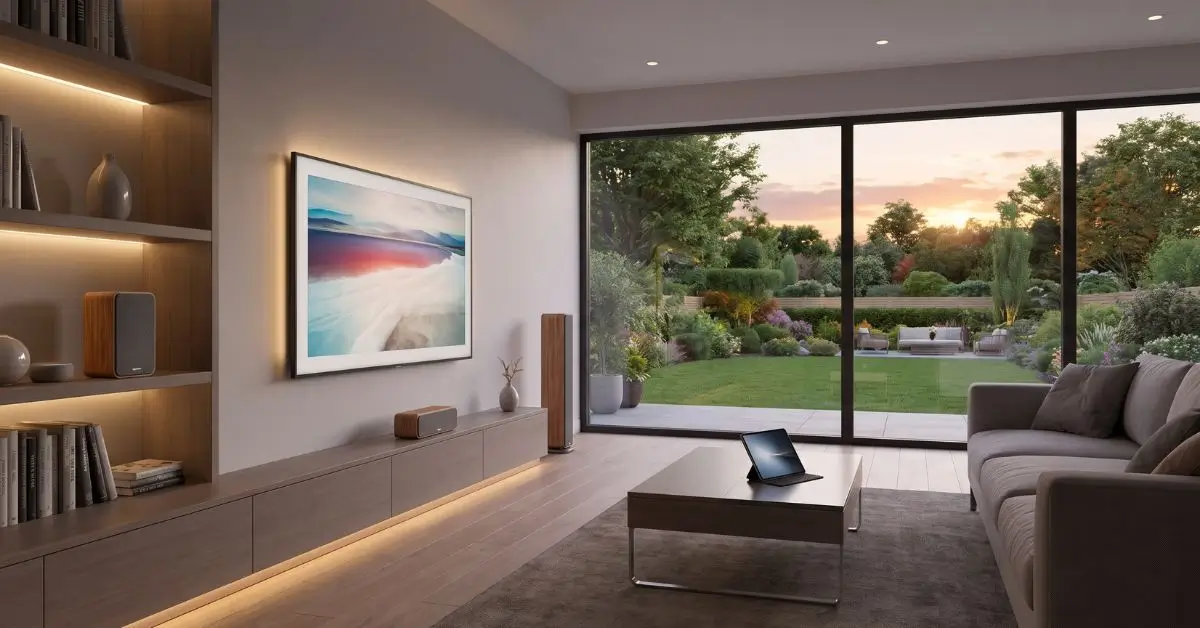
Start with the television. Instead of mounting a standard thick screen with visible brackets, look into slim gallery-style screens. These models sit completely flat against the drywall and feature customizable magnetic frames in walnut, white oak, or brushed metal. When you are not watching a show, the screen displays classic oil paintings or photography with a matte finish that looks like real paper canvas.
For sound, skip the massive black plastic subwoofers sitting in the corner. Choose compact soundbars covered in woven fabric, or install architectural speakers directly into your ceiling or drywall. You can paint the speaker grilles the exact same color as your walls so they disappear from view completely.
Keep your streaming boxes, gaming consoles, and smart hubs inside a ventilated media console cabinet. Modern remote controls use Bluetooth and Wi-Fi signals, which means they can easily send commands through closed wooden cabinet doors without needing a direct line of sight.
+-------------------------------------------------------------+
|                     LIVING ROOM WALL                        |
|                                                             |
|         +-----------------------------------------+         |
|         |  [ Slim Frame TV / Art Display Mode ]   |         |
|         +-----------------------------------------+         |
|                                                             |
|         +-----------------------------------------+         |
|         |   [ Fabric-Covered Slim Soundbar ]      |         |
|         +-----------------------------------------+         |
|                                                             |
|   +-----------------------------------------------------+   |
|   |             WOODEN MEDIA CONSOLE                    |   |
|   |  [Hidden Hub]     [Hidden Console]    [Vent Path]   |   |
|   +-----------------------------------------------------+   |
+-------------------------------------------------------------+
The Bedroom
Your bedroom should feel peaceful and restful. Bright screens and glowing power bricks work against that goal.
Replace standard plug-in phone chargers with a wooden nightstand that features an integrated charging pad hidden beneath the top veneer layer. You simply rest your phone on the wood surface at night, and it charges without any visible plastic pad or loose wire in sight.
For lighting, install smart light bulbs inside your favorite vintage or ceramic bedside lamps instead of buying futuristic-looking plastic smart lamps. This gives you automated scheduling, warm sunrise wake-up routines, and voice control while preserving the traditional look of your bedroom furniture.
The Kitchen
Kitchen counters collect clutter very quickly. Adding smart displays and voice assistants can leave you with almost no room to prepare meals.
To keep your counters clean, mount small smart displays underneath your upper cabinets using low-profile metal brackets. This keeps the screen at eye level for following recipes or watching morning news clips while leaving the countertop completely clear for cutting boards and appliances.
If you keep a smart speaker on an open shelf, place it beside ceramic canisters, cookbooks, or a potted plant. Surrounding the electronic device with natural organic items helps soften its appearance.
The Home Office
Working from home requires several electronic tools, including monitors, laptops, webcams, and task lights. An unmanaged home office easily turns into a tangle of cords.
Mount a heavy-duty cable management tray underneath the back edge of your desk. Place your power strip inside this tray so every monitor and computer cord plugs in beneath the desk surface. Run a single braided power cable from the tray down one desk leg to the wall outlet, securing it with hook-and-loop straps.
Use a wireless mouse and keyboard to keep the desktop surface smooth and open. Choose a desk pad made from felt or genuine leather to add warm organic texture beneath your metallic computer gear.
Practical Ways to Hide Cords and Power Supplies
Cable management is the most important part of any home device decoradtech project. You do not need to hire an expensive contractor to get professional results.
Here are four simple, budget-friendly ways to manage wires:
- In-Wall Power Pass-Through Kits: For wall-mounted screens, buy an in-wall cable routing kit from your local hardware store for around $40 to $70. These kits let you drop power and HDMI cables behind the drywall safely without running loose cords down the front of the wall.
- Paintable Surface Raceways: If you rent your home and cannot cut holes in the drywall, use self-adhesive plastic cord channels. Snap your wires inside the channel and paint the exterior using the exact same paint color as your room wall.
- Fabric Cable Sleeves: When multiple cords must run from a desk down to the floor, group them inside a zippered fabric sleeve in a color that matches your baseboards.
- Hollow Baseboard Trims: Some modern baseboard designs feature hollow internal channels designed specifically to route speaker wires and network cables around the perimeter of a room.
Smart Tech Style Comparison
Use this table to see how standard electronics compare with aesthetic alternatives across typical home spaces.
| Living Space | Standard Tech Setup | Decor-Friendly Alternative | Main Aesthetic Benefit |
|---|---|---|---|
| Living Room Screen | Bulky black frame TV with hanging cords | Slim frame TV with magnetic wooden bezel | Looks like real wall art when turned off |
| Audio System | Glossy black plastic speakers on stands | In-wall speakers with paint-matched grilles | Delivers great sound with zero floor clutter |
| Bedside Charging | Plastic charging docks with loose cables | Wooden table with hidden induction pad | Keeps nightstand completely clear of wire nests |
| Accent Lighting | Harsh colored LED strips with visible diodes | Indirect warm light strips hidden in coves | Creates soft background glow without glare |
| Kitchen Assistant | Countertop smart display near food prep | Under-cabinet mounted display screen | Frees up counter space for meal prep |
What to Look for When Shopping
When shopping for decorative smart gear in the US, UK, or Canada, keep these buying criteria in mind so you spend your money wisely.
       Buyer Checklist
       ├── Materials   -> Wood, acoustic fabric, matte metal
       ├── Lighting    -> 2200K-2700K warm range, dimmable LEDs
       ├── Controls    -> App dimming for standby status lights
       └── Form Factor -> Flush-mount brackets, compact profiles
Check the Exterior Materials: Look for aluminum, glass, matte plastics, and acoustic fabrics. Avoid cheap glossy plastics because they attract dust, show oily fingerprints, and reflect harsh glare from room lamps.
Verify Light Color Temperatures: If you are buying smart bulbs or light strips, make sure they support warm white color ranges between 2200K and 2700K. Cool white light (above 4000K) feels clinical and harsh in residential living rooms and bedrooms.
Look for Flush-Mount Options: Check whether wall items come with zero-gap mounting brackets. A device that rests completely flat against the wall looks much more like a custom design feature than one that sticks out several inches.
Review the Ecosystem Compatibility: Make sure the stylish device you pick works smoothly with your existing smart platform, whether you use Apple Home, Google Home, or Amazon Alexa. A beautiful gadget that regularly drops its Wi-Fi connection causes daily frustration.
Common Mistakes to Avoid
Even with the best intentions, it is easy to make simple mistakes when setting up your space. Here are three common errors to avoid.
Blocking Sensor Lines and Microphones
Never cover smart device microphones or motion sensors with thick cloth, decorative bowls, or heavy books. Doing so prevents your voice assistants from hearing commands and stops motion-activated smart lights from detecting when you walk into the room. Always leave an open path for internal sensors to work properly.
Trapping Heat Inside Closed Cabinets
Electronics generate heat while running. If you hide a gaming console, amplifier, and network router inside a solid wood cabinet without airflow, they will overheat and shut down. Drill ventilation holes in the back of the cabinet or install a silent USB-powered cooling fan to pull warm air out.
Overusing Colored Accent Lights
Smart LED lighting is fun, but setting your entire living room to bright neon green or deep purple often looks cheap. For everyday living, stick with warm golden whites and soft amber tones. Save vivid color accents for movie nights or special holiday occasions.
Honest Pros and Cons
Every design choice comes with trade-offs. Here is a balanced look at the pros and cons of focusing on decorative technology.
Pros:
- Creates a clean, relaxing home environment free from visual mess and cord tangles.
- Increases the visual appeal and resale impression of your home interior.
- Lets you enjoy modern automated convenience without making your living room look like an electronics showroom.
- Dual-purpose furniture saves floor and counter space in small apartments and homes.
Cons:
- Aesthetic smart gadgets often cost 20% to 50% more than basic plastic alternatives.
- Hiding wires inside walls or furniture requires extra installation time and basic DIY tools.
- Upgrading or swapping out built-in devices in the future takes more effort than simply unplugging a loose gadget.
Conclusion
A modern home should work efficiently while still feeling warm, welcoming, and peaceful. By embracing the principles of home device decoradtech, you no longer have to sacrifice interior beauty for smart convenience.
You do not need to remodel your entire house all at once. Start small with one problem area. Clean up the messy cord bundle behind your television this weekend, or replace a plastic bedside charger with a tidy wooden alternative. Small adjustments make a huge difference in how your home looks and feels every single day.
Take a look around your favorite room today, identify the single most distracting electronic cord or black box, and try one concealment tip from this guide.
Frequently Asked Questions
What does home device decoradtech mean?
It means blending smart devices with home decor using hidden cables, natural finishes, and stylish designs.
How can I hide TV wires?
Use paintable cable raceways or place furniture below the TV to conceal cables.
Are frame TVs good for home decor?
Yes. They blend into interiors by displaying artwork and offering customizable frames.
Can regular electronics look more decorative?
Yes. Use vinyl skins, decorative baskets, or fabric-wrapped cables to improve their appearance.
Do wooden cabinets affect Wi-Fi?
Usually only slightly. Avoid metal cabinets and ensure proper ventilation for enclosed electronics.
[…] interior design drhomey across different living zones ensures harmony throughout your entire floor […]