

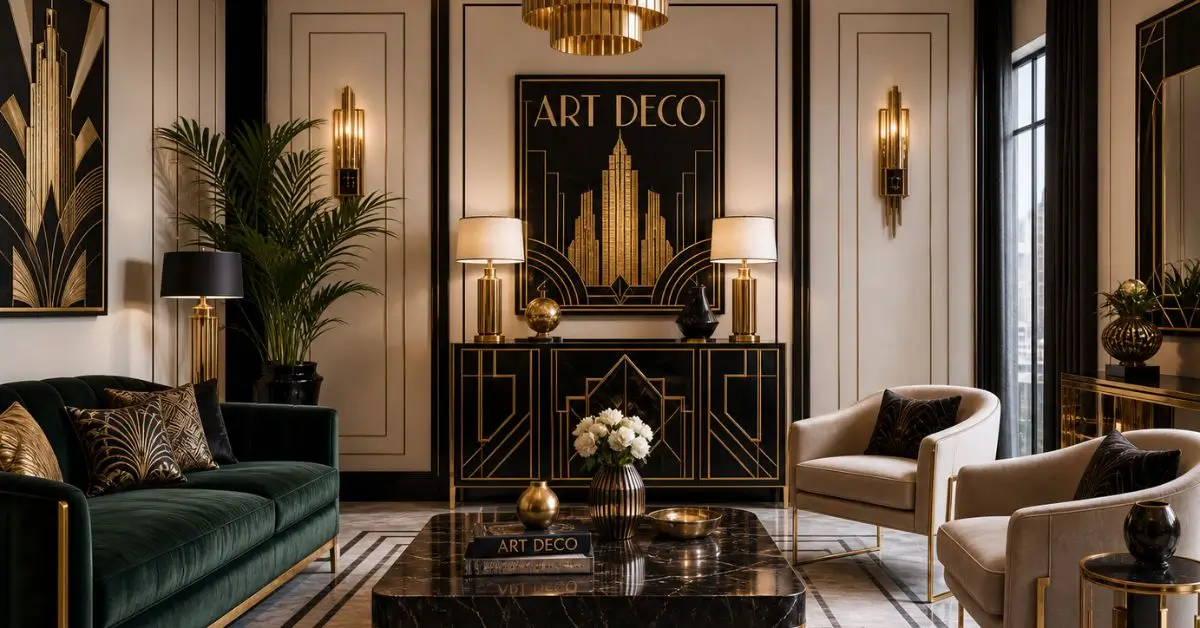
Art Deco Home Decor
Some interior design styles feel dated the moment a new trend arrives. Art Deco is not one of them. This is a style that has been genuinely influential since the 1920s — and it keeps coming back because it does something very few design movements manage to do: it feels glamorous without being fussy, and bold without being chaotic.
The challenge most people face with Art Deco home decor is knowing where to start. The style has a strong visual identity, and getting it wrong can tip quickly from elegant to overdone. Too much gold and geometric pattern without balance creates a look that feels more like a theme park than a home.
This guide breaks down exactly what Art Deco is, what defines it visually, how to apply it room by room, and how to bring this iconic aesthetic into a modern home in a way that feels intentional and refined rather than costumey.
Art Deco home decor is an interior design style rooted in the 1920s and 1930s that celebrates geometric shapes, bold symmetry, luxurious materials, and rich color contrasts. It blends modernist influences with decorative elegance — characterized by gold and black accents, mirrored surfaces, velvet textures, and strong angular lines that create spaces that feel both dramatic and sophisticated.
Quick Summary
Art Deco home decor is defined by geometric patterns, rich materials, bold color contrasts, and glamorous details. It works in modern homes when applied with balance — using key pieces and accents rather than trying to recreate the full 1920s aesthetic. This guide covers the core elements and how to use them practically room by room.
The Origins of Art Deco and Why It Still Resonates
Art Deco emerged in France in the early 1920s and reached its peak in the late 1920s and 1930s. It was a deliberate response to the ornate, nature-inspired curves of Art Nouveau — replacing flowing organic shapes with clean geometric lines and celebrating modernity, progress, and luxury.
The style spread rapidly through architecture, fashion, jewelry, and interior design. Iconic buildings like the Chrysler Building in New York City and the Empire State Building are among the most famous examples of Art Deco architecture. Inside, the same principles applied — bold forms, rich materials, and a sense of ordered glamour.
What makes Art Deco home decor enduringly relevant is that it aged in a different direction than most vintage styles. Rather than looking dated, well-executed Art Deco interiors look expensive and considered. The combination of geometric precision with luxurious materials translates effectively into contemporary spaces — which is why designers keep returning to it.
The Core Visual Elements of Art Deco Style
Understanding the building blocks of Art Deco makes it much easier to apply confidently. Every strong Art Deco interior draws from the same foundational vocabulary.
Geometric Patterns and Symmetry
The most immediately recognizable feature of Art Deco design is its use of geometry. Chevrons, sunbursts, fan shapes, stepped forms, and bold diagonal lines appear everywhere — in flooring patterns, wallpaper, textiles, furniture silhouettes, and decorative objects.
Symmetry is equally important. Art Deco spaces tend to be visually balanced — matching lamps on either side of a sofa, paired armchairs, centered artwork. This sense of order is part of what gives the style its composed, formal elegance.
Rich Color Contrasts
Art Deco is not a neutral style. The palette tends toward bold contrasts: black and gold, navy and brass, emerald green and cream, burgundy and bronze. These combinations create visual drama without relying on pattern alone.
That said, Art Deco does not require dark rooms. Many successful interpretations use a lighter base — soft ivory or warm white walls — with Art Deco accents in deeper tones. This approach works particularly well in smaller homes or apartments where a fully dark palette would feel overwhelming.
Luxurious Materials
The original Art Deco movement celebrated materials that felt modern and expensive — lacquered wood, polished chrome, marble, mirrored glass, and exotic veneers. Fabrics were equally luxurious: velvet, silk, and satin in rich jewel tones.
In contemporary Art Deco home decor, these materials translate into velvet sofas in deep colors, brass or gold hardware, marble surfaces, lacquered furniture finishes, and mirrored accent pieces. You do not need all of them in one room — selecting two or three used well creates the effect more successfully than layering everything at once.
Bold Lighting as a Design Feature
Lighting in Art Deco spaces does not hide in the background. It is a design statement. Stepped geometric pendants, globe-shaped sconces, and floor lamps with strong angular bases are all characteristic of the style.
Warm, golden light suits Art Deco interiors particularly well — it enhances the richness of jewel tones and makes metallic finishes glow rather than glare. A well-chosen Art Deco-inspired pendant light can define the entire character of a room on its own.
Applying Art Deco Home Decor Room by Room
Living Room
The living room is the most natural space to introduce Art Deco elements because it is where the style’s love of bold statement pieces has the most impact.
Start with the sofa. A deep-toned velvet sofa — emerald, navy, or burgundy — immediately anchors the room in Art Deco territory without requiring any other major changes. Add geometric cushions in contrasting tones and a brass or gold-finished coffee table with clean lines.
A bold area rug with a geometric pattern grounds the seating arrangement. Look for chevron, stepped diamond, or sunburst patterns in a palette that complements your sofa color.
Mirrored side tables or a mirrored drinks cabinet add the reflective surfaces that are central to the Art Deco look — they also make smaller living rooms feel larger by bouncing light around the space.
Bedroom
An Art Deco bedroom centers on the bed frame. Upholstered headboards in velvet — particularly tufted or channel-stitched designs with geometric detailing — are a strong starting point. Pair with brass or gold bedside lamps and simple, symmetrical nightstands.
Bedding in rich tones — deep teal, warm champagne, or classic black and white — reinforces the palette without needing additional pattern work on the walls. Keep the overall bedroom relatively calm and controlled. Art Deco bedrooms work best when they feel sumptuous rather than busy.
A mirrored wardrobe or a single large mirrored panel on one wall adds depth and the characteristic glamour of the style.
Bathroom
Bathrooms offer a surprisingly effective opportunity for Art Deco expression. Black and white geometric floor tiles are one of the most practical and affordable ways to introduce the style — this classic combination reads as genuinely Art Deco and is widely available through standard tile retailers.
Brass or matte gold fixtures — taps, towel rails, mirror frames — complete the look with minimal investment. A dramatic vanity mirror with a stepped or geometric frame is a strong focal point and a relatively affordable statement piece.
Even in a small bathroom, these elements together create a cohesive, high-end look that photographs beautifully and adds real character to what is often the most ignored room in a home.
Entryway
The entryway is the first impression of a home, and Art Deco elements work particularly well here because the space is typically small enough that a few strong pieces do the full job.
A geometric black and white tile floor is a classic choice. A statement mirror with a bold frame — sunburst, stepped rectangle, or octagonal — creates immediate visual impact. A sleek console table in lacquered black or dark walnut with brass legs ties the space together.
Good lighting is especially important in an entryway. A globe pendant or an angular flush-mount fixture with warm light makes the space feel intentional and welcoming.
How to Mix Art Deco With Modern Interiors
The most livable and sophisticated interpretation of Art Deco today is not a full period recreation — it is a modern interior with carefully chosen Art Deco accents.
A clean, contemporary room with neutral walls and modern furniture becomes an Art Deco space with the right additions: a velvet sofa, a brass pendant light, a geometric rug, a mirrored side table. The contrast between modern simplicity and Art Deco richness actually makes both elements look better.
This approach also makes the style accessible for renters and people working with smaller budgets. You do not need to renovate to achieve an Art Deco feel. Accessories, textiles, and lighting do most of the heavy lifting.
Key Art Deco Elements and Where to Use Them
| Element | Best Used In | Approximate Cost Range |
|---|---|---|
| Velvet sofa or armchair | Living room, bedroom | $400 – $2,000+ |
| Geometric area rug | Living room, bedroom | $100 – $600 |
| Brass or gold light fixtures | Any room | $80 – $400 |
| Mirrored furniture or panels | Living room, bedroom, entryway | $150 – $800 |
| Black and white geometric tile | Bathroom, entryway | $3 – $15 per sq ft |
| Sunburst or stepped mirror | Entryway, living room, bathroom | $80 – $350 |
| Lacquered furniture | Bedroom, living room | $300 – $1,500+ |
Common Mistakes to Avoid
Art Deco home decor has a few pitfalls worth knowing before you start decorating.
Going too heavy on gold. Gold accents are central to the style, but too much creates a look that feels ostentatious rather than elegant. Use gold as an accent metal — in hardware, lamp bases, mirror frames, and small decorative objects — not as a primary color across large surfaces.
Mixing too many patterns at once. Geometric patterns are essential, but layering three or four different bold patterns in one room creates visual noise rather than style. Choose one dominant pattern — usually the rug — and keep other textiles more controlled.
Ignoring scale. Art Deco furniture tends toward substantial, architectural forms. Placing small, delicate furniture in a room styled as Art Deco creates a mismatch. Make sure your key pieces have enough visual weight to carry the style.
Over-darkening the space. The rich color palette of Art Deco can make rooms feel smaller and darker if not managed carefully. Balance deep tones with adequate lighting, mirrored surfaces, and lighter ceiling colors.
Frequently Asked Questions
What is Art Deco home decor?
Art Deco is a 1920s–30s design style known for geometric patterns, bold colors, luxurious materials, and metallic accents.
What colors are used in Art Deco interiors?
Popular colors include black, gold, emerald green, navy, burgundy, cream, and brass for a bold, elegant look.
How can I add Art Deco style on a budget?
Use velvet cushions, geometric rugs, brass lighting, statement mirrors, and vintage décor to achieve the look affordably.
What is the difference between Art Deco and Art Nouveau?
Art Nouveau features flowing natural curves, while Art Deco focuses on geometric shapes, symmetry, and modern luxury.
Can Art Deco work in small spaces?
Yes. Use a few statement pieces, mirrors, and metallic accents with light-colored walls to create an elegant look without overwhelming the room.